Project timeline
Ni Ti Mountain Project Timeline
Project development is ongoing, with a strong focus on community engagement. Dates are current estimates and may change.
Ongoing
Community Engagement
Ongoing engagement with the community throughout the project lifecycle to gather input that helps inform studies, project design and mitigation measures, while building lasting partnerships.
BC Hydro RFP Submission & Award
Submitting project proposals and being awarded an electricity purchase agreement by the BC Hydro.
2024
Studies, Design & Permitting
Conducting archaeological, cultural, environmental, technical, and social studies to finalize the project layout and mitigation measures.
2025 & 2026
Start of Construction
Breaking ground and beginning construction activities.
Q3 2027
Commercial Operation Date
Project starts delivering clean energy.
2029
Operations (30 years)
Ongoing operation, maintenance, and community collaboration throughout the project’s lifecycle.
2029–2050
EPA Extension, Decommissioning & Restoration
Based on the Electricity Purchase Agreement (EPA), the project is expected to have an initial operational life of 30 years. At that point in time, the project may seek an EPA extension under a re-negotiated EPA or be decommissioned. Once operations conclude, the site would be decommissioned, which involves the safe removal of site equipment and infrastructure. Then, the site must be restored to a natural state or prepared for other uses such as agricultural, recreation, or First Nations traditional cultural practices.
2060-2061

Partners details
Stellat'en First Nation
Stellat’en First Nation, located in the glacial basin between Fraser Lake and Vanderhoof, has a long tradition of forward‑thinking, community‑driven decision‑making. Stellat’en has identified several short and long term goals in their Economic Development Plan, which prioritizes seeking and promoting economic initiatives that enhance the quality of life and prosperity of Stellat’en members; developing diverse, environmentally sustainable, and profitable businesses that respect their history, culture, traditions, and the environment; exercising their inherent right to access natural resources within their traditional territory; and building the capacity of Stellat’en members to become successful entrepreneurs.
Stellat’en independently identified the Ni Ti Mountain Wind Project as a means of achieving these objectives and secured an Investigative Licence to assess wind energy potential, a vision that led to their 2016 partnership with Innergex. Today, as the majority equity holder (51%) alongside Nadleh Whut’en, Stellat’en contributes extensive land‑based and environmental expertise and aligns fully with the Partnership’s commitment to fostering strong, sustainable relationships with Indigenous communities. As a member of the Carrier Sekani Tribal Council—together with Nadleh Whut’en—Stellat’en also plays a key role in helping potential industrial partners understand the Aboriginal rights and title exercised in the region.
Nadleh Whut’en
Nadleh Whut’en is based near Fraser Lake 3 km west of the unincorporated town of Fort Fraser. Nadleh Whut’en are the “people who live where the salmon return” and are a proud community of Dakelh peoples (also known as Carrier). Nadleh Whut’en have lived on their traditional territory since time immemorial and are a part of the larger Yinka Dene (Carrier) Nation.
As an equity partner, Nadleh Whut’en is committed to a collaborative approach in negotiating with government and industry to ensure that their Indigenous perspective is well represented. They seek to find balance between environmental integrity, cultural preservation, and economic growth through the integration of modern environmental assessment techniques and traditional knowledge. Nadleh Whut’en actively engages in consultations to secure agreements that reflect rights and concerns, often resulting in more sustainable and mutually beneficial outcomes which balance economic needs with cultural sustainability.

Innergex
Innergex is a global leader in renewable energy, developing, building, owning, and operating hydroelectric, wind, solar, and energy storage facilities with a long-term vision. Guided by a commitment to sustainable development, the company strives to balance people, our planet, and shared prosperity, while being a trusted partner and neighbour in the communities where it operates.
Founded in 1990 and headquartered in Canada, Innergex has grown into an international force with operations in British Columbia, Ontario, Quebec, the United States, France, and Chile. As the largest independent power producer in British Columbia, the company has over 20 years of experience delivering clean energy projects in the province, many in close partnership with Indigenous communities, demonstrating how renewable energy can create lasting community and environmental benefits.
The project
A wind project on Yinka Dene territory
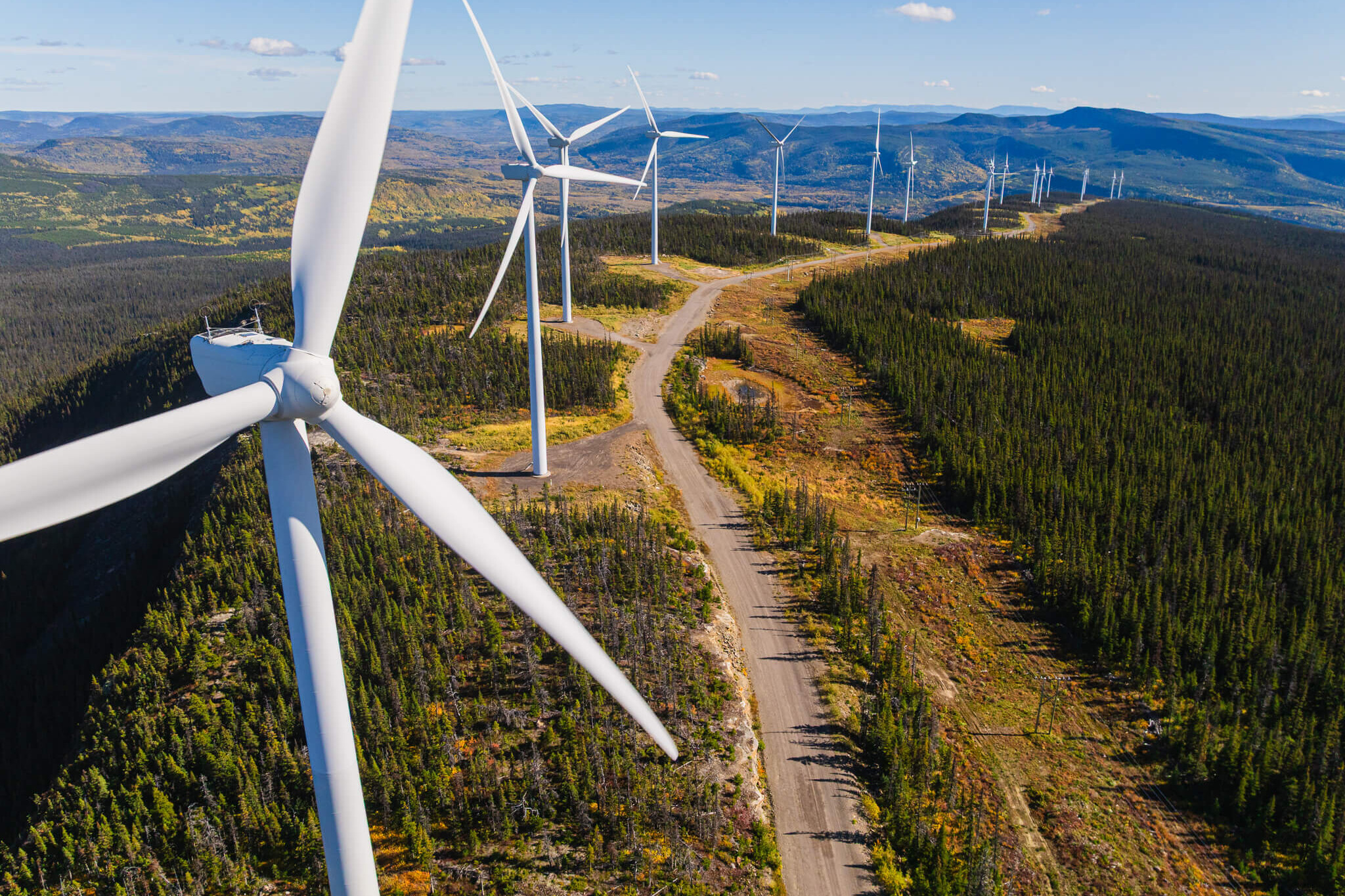
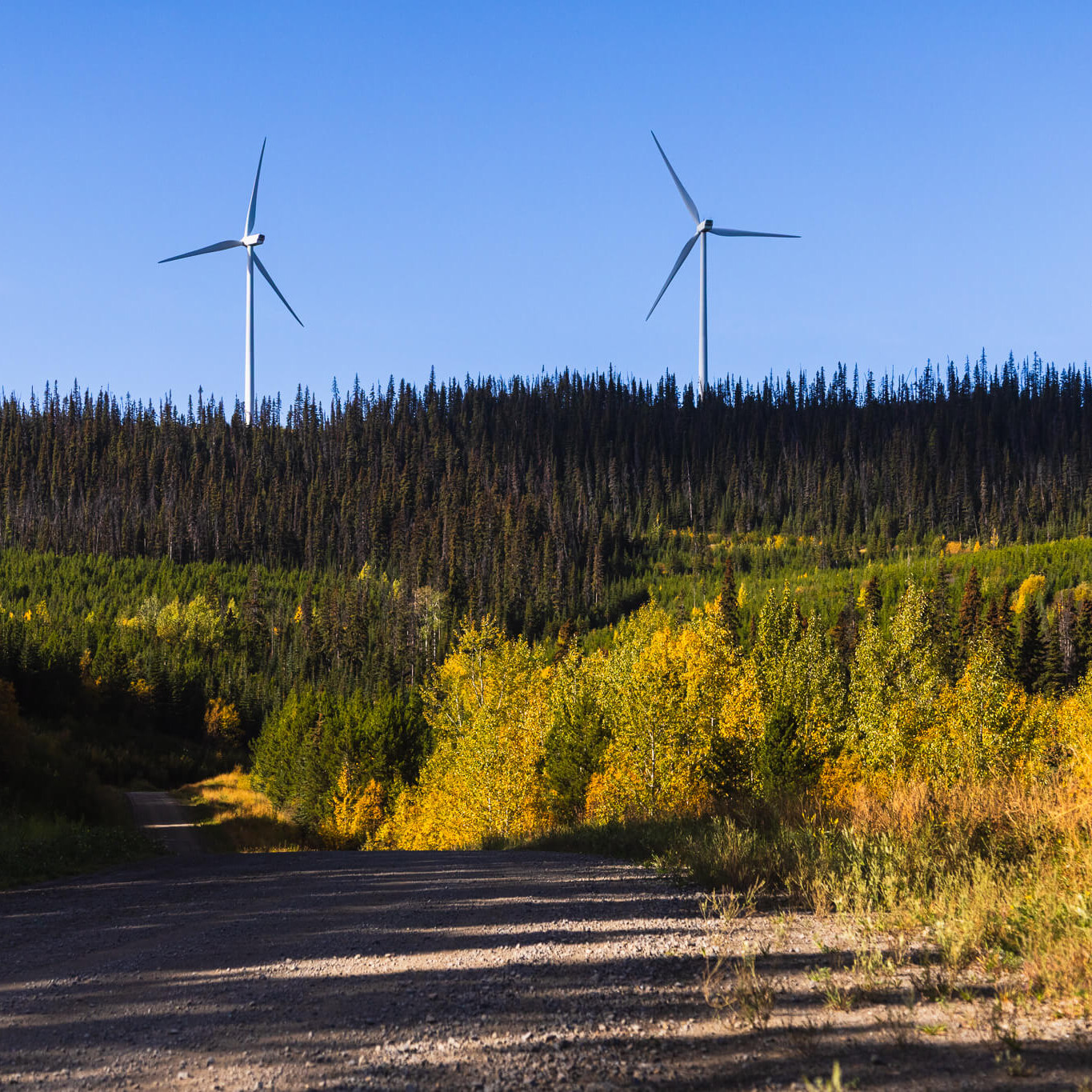
The Ni Ti Mountain Wind Project is an Indigenous community-led initiative on Yinka Dene territory, near Fraser Lake, BC. Majority-owned by Stellat’en First Nation and Nadleh Whut’en collectively and developed in partnership with Innergex, the project will generate clean, renewable electricity while bringing long-term benefits and opportunities to the community.
This partnership is grounded in mutual respect and shared intent to design, build, and operate a renewable energy project that reflects both Indigenous knowledge and industry best practices. The Ni Ti Mountain Wind Project consists of approximately 35 wind turbines (contributing up to 200 MW of electricity) and supporting infrastructure including collector lines, an on-site substation and operations and maintenance facility, and an approximately 23 km long 230kV transmission line connecting to BC Hydro’s Glenannan Substation.
Did you know?
The name Ni Ti, means “Road to the North,” in the Dakelh language. The project logo tells a similar story: it was created through a community contest and inspired by pictographs found in the Fraser Lake area. The logo proudly includes the words Ni Ti in Dakelh syllabics, grounding the project in local culture and history.
Highlights of the project

Up to 200 MW of Capacity
The project will produce renewable electricity, enough to power over 35,000 households.

Long-Term Local Benefits
With an initial operating term of 30 years, the project promotes sustainable economic growth by creating local job and procurement opportunities during construction and operations.

Commitment to Economic Reconciliation
The project advances economic reconciliation through majority Indigenous ownership by Stellat’en First Nation and Nadleh Whut’en supporting long term revenues, job creation, and community development.
Impact Assessment
The project carefully considers the site archaeological, cultural, and environmental features, while aiming to minimize land disturbance.

Wind Resource and Infrastructure
Approximately 35 wind turbines and a 23 km 230 kV transmission line, supported by over 10 years of wind data, ensuring efficient and reliable renewable energy production.

Indigenous Governance
Indigenous‑led governance integrates Indigenous values into environmental design, permitting, and land use, through the Yinka Dene Ecological and Cultural Rights Based Assessment, advancing stewardship, cultural preservation, and Indigenous‑led decision‑making.
Partners and Governance
51%

49%
Project Location
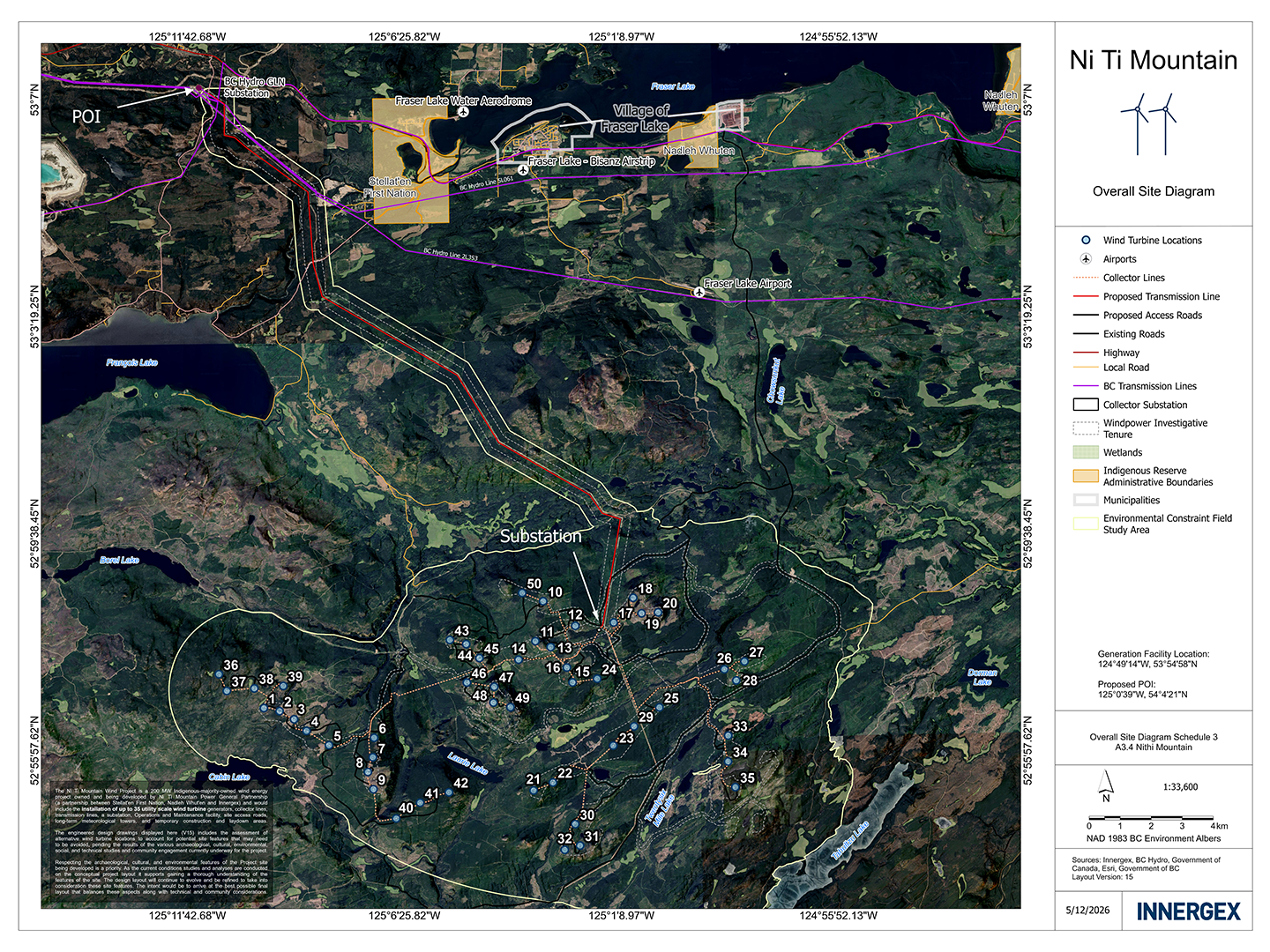
The engineered design drawings displayed here (V15) includes the assessment of alternative wind turbine locations to account for potential site features that may need to be avoided, pending the results of the various archaeological, cultural, environmental, social, and technical studies and community engagement currently underway for the project. Respecting the archaeological, cultural, and environmental features of the Project site being developed is a priority. As the current conditions studies and analyses are conducted on the conceptual project layout it supports gaining a thorough understanding of the features of the site. The design layout will continue to evolve and be refined to take into consideration these site features. The intent would be to arrive at the best possible final layout that balances these aspects along with technical and community considerations.